
DISCLAIMER: This article is general information only and isn’t advice about your individual NDIS plan. Rules and dates may change, so check the NDIS website or speak to the NDIA for current details.
The changes to NDIS funding in 2027 are the second half of a reform that began on 1 October 2026, and most participants will feel them when their plan next renews. There are three big pieces: reductions to two support budgets, a new way of building plans, and a shake-up of plan management and provider rules. None of it lands overnight, but the dates matter, so it helps to know where yours falls.
This guide covers what’s changing, when, and what you can do about it now. It’s general information as at November 2026, not advice on your own plan, and some details are still being finalised.
What are the main changes to NDIS funding in 2027?
In 2027, four things move from announcement to reality: funding reductions reach plan renewals, new framework planning begins, plan management gets a new structure, and more providers must be registered. Children’s supports shift too, though the big change to child eligibility doesn’t arrive until 1 January 2028.
The legislation behind all this passed Parliament on 19 August 2026 and received Royal Assent the next day. The government says the aim is to put the scheme on a more sustainable footing. Disability advocates have been vocal about their worries, particularly around how the new assessments will work and how transparent they’ll be. Both views are worth keeping in mind as you read on.
When do the 2027 NDIS changes start?
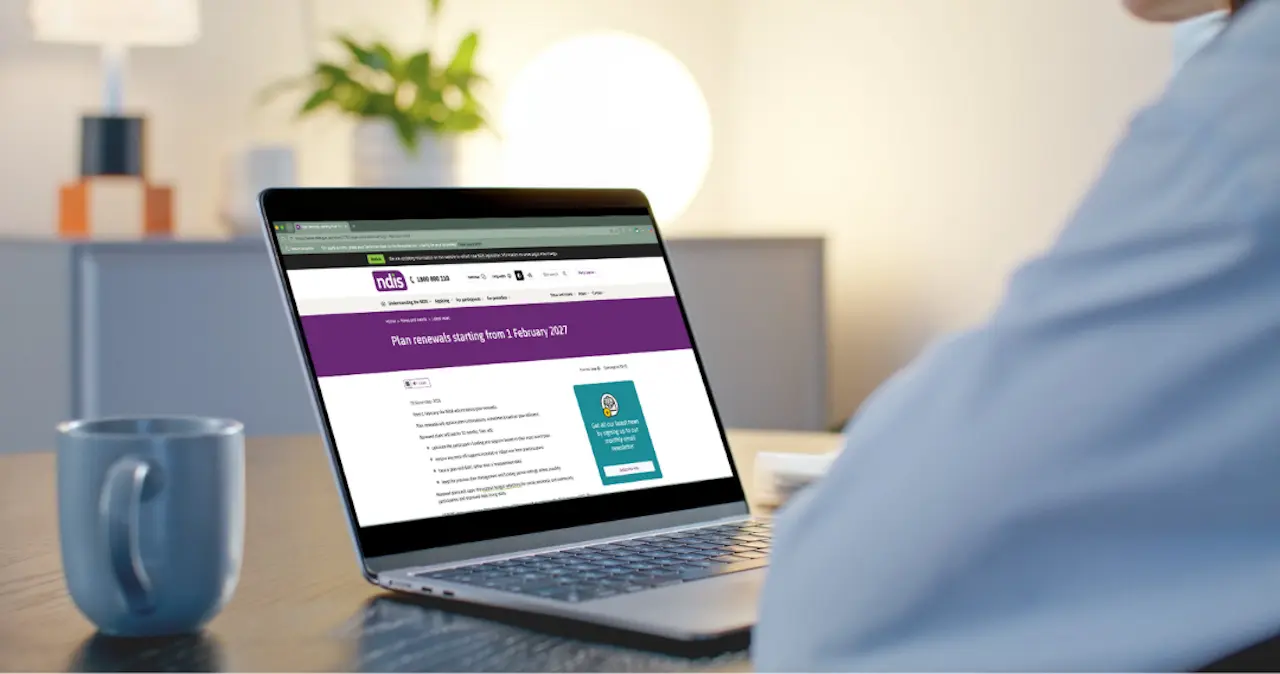
- 1 February 2027: The funding reductions start being applied to plan renewals, not just reassessments. Tighter assessment of reasonable and necessary supports also begins progressively.
- 1 April 2027: New framework planning starts, and participants begin moving across gradually.
- Mid 2027: Medicare Thriving Kids is expected to be fully rolled out for younger children.
- 30 September 2027: The deadline by which plans containing the affected supports will have been renewed.
- 1 October 2027: A new plan management approach begins, with a six-month transition.
- 1 January 2028: Eligibility changes for new NDIS applicants, including children aged 8 and under with developmental delay and/or autism and lower support needs.
Will my NDIS plan be reduced in 2027?
Possibly, if your plan includes funding for social, economic and community participation or improved daily living skills. From 1 October 2026, those two budgets are being reduced by 50% and 10% respectively, and the change is applied whenever a plan is created, reassessed or renewed between 1 October 2026 and 30 September 2027.
That’s why 2027 is the year this really bites. Renewals only start picking up the reduction from 1 February 2027, and everyone with these supports will have been through a renewal by 30 September. The NDIA says it will contact you 60 days before your renewal, and you don’t need to send extra information. The reduction applies the moment your new plan starts, and the plan will show how much the funding was reduced by.
One more detail: the reduction doesn’t apply to new framework plans. So if you move across to the new system, a different set of rules decides your budget.
How big is the reduction in real terms?
It depends on how much of your budget you actually use. The government’s own example is a participant with $50,000 a year for community participation who only spends $30,000. After the 50% reduction they’d have $25,000 available, so their real-world spending drops by $5,000, not $25,000.
If you routinely use your whole budget, though, the gap will be bigger. That’s the reason to look at your actual spending before your renewal comes around.
Which supports are protected?
- Supports in employment
- Disability-related health supports
- High intensity supports
- Intensive and complex behaviour supports
- Customised and wearable technology
- Hearing services
The NDIS has also said day-to-day supports like help with eating, dressing, toileting and medication, plus home and vehicle modifications, mobility equipment and specialist disability accommodation, are not affected. A full list of excluded supports is published on the NDIS website, so it’s worth checking your plan against it.
Can I challenge the reduction?
The NDIS states that the budget reduction itself is not a reviewable decision. There are some pathways, though. Participants with very high support needs across daily life, home and living, and community participation can ask for a plan variation if their budget in those categories meets a set threshold, and anyone affected by fraud, a crisis or an emergency can contact the NDIA to talk about changes. Check the current criteria on the NDIS website, because they’re specific.
What does the 10% reduction mean for speech pathology and OT?
For most people, therapy sits in the improved daily living skills category, which means it’s subject to the 10% reduction. That’s a smaller cut than the 50% applied to community participation, but it lands on the budget that pays for speech pathology, occupational therapy and similar supports.
What that means for you depends on your plan. If you’ve been underspending your therapy funding, you may barely notice. If you use every dollar, you’ll need to be more deliberate about where the hours go.
In our experience, a few things help stretch a budget without watering down the outcomes:
- Setting one or two priority goals per plan period instead of spreading sessions thin
- Using a home program so progress continues between sessions
- Mixing session formats, such as a block of in-person sessions followed by shorter check-ins
- Using mobile occupational therapy or telehealth, which can cut out travel time
What is new framework planning, and will it affect me in 2027?
New framework planning is the NDIS’s new way of building plans, starting from 1 April 2027. Instead of the current approach, a support needs assessment gathers information about your daily life and support needs, and your budget is then worked out by applying that assessment to a set of budget method rules.
Adults aged 18 and over will move across gradually between April 2027 and 31 December 2030, so many people won’t notice a difference at first. The government says it will give participants more flexible budgets and more choice about how funds are used. Sector feedback has been more cautious, with concerns about how assessors are trained and how participants prepare.
The process runs in four steps:
- 1. The NDIA contacts you to help you prepare for your assessment.
- 2. An assessor meets with you to understand your support needs and goals.
- 3. The assessment report is used to set your budget and build your plan.
- 4. You start using the plan.
If your turn comes up, good evidence matters. Recent reports from your speech pathologist or occupational therapist, and a clear picture of what a typical week looks like for you, will make the assessment conversation easier.
Are NDIS changes coming for children in 2027?
Not to eligibility, not yet. There are no changes to how people access the NDIS until 1 January 2028, so children currently on the scheme and families applying now will go through the same process as before.
What is happening in 2027 is the build-up. Thriving Kids started rolling out on 1 October 2026 for children aged 8 and under with developmental delay and/or autism and low to moderate support needs. It grows through 2027, and all supports are expected to be available by 1 January 2028. Children don’t need a diagnosis to get help through it.
From 1 January 2028, children in that group will be supported through Thriving Kids instead of the NDIS. Children already on the scheme will be reassessed under the criteria in place before that date, and children with permanent and significant disability or higher support needs will remain eligible for the NDIS. We’ve covered how the program works in our Thriving Kids program post.
How will plan management and provider rules change?
Both change in 2027, and both are worth knowing about if you self-manage or use a plan manager. A new panel of plan management providers begins on 1 October 2027, with a six-month transition. Government will set up the panel, and participants will be required to choose from it.
Provider registration is also expanding. Providers of higher-risk supports will need to be registered, and participants receiving those supports will need to choose a registered NDIS provider. The wider rollout runs through to 2030. You’ll still be able to choose unregistered providers for lower-risk supports.
The timing of these changes has shifted a few times in official documents, so confirm dates with your plan manager or the NDIS website before you make decisions.
How can you prepare for the changes to NDIS funding 2027?
The best preparation is boring but effective: know your plan end date, know how you spend your funding, and have evidence ready. You don’t need to do everything at once.
Before your plan renews
Start with your plan end date, because the NDIA’s 60-day contact is your starting gun. From there:
- Check how much you've spent in each support category over the plan period •
- Ask your therapists for up-to-date progress reports
- Write down what each support is achieving in everyday terms, such as "can order at a café" or "manages buttons independently"
- Decide which goals matter most if your budget ends up smaller
If your funding falls short
A smaller budget doesn’t automatically mean the end of therapy. Depending on your situation, other options can sit alongside the NDIS, such as Medicare-subsidised allied health through a GP plan for eligible chronic conditions, private health extras, and Thriving Kids for children aged 8 and under. We walk through these in more detail in our posts on alternative funding options when NDIS application is rejected and what happens when NDIS funding runs out.
Getting support
The changes to NDIS funding in 2027 are significant, but they’re staged, and most of them reach you at a predictable moment: your plan renewal. If you know when that is and you’ve got your evidence in order, you’re in a far stronger position than if you wait for the letter.
If you’d like a hand working out how to get the most from your therapy budget, the team at Brighter Futures Allied Health can help with speech pathology and occupational therapy for children and adults across South Western Sydney, including mobile and telehealth options. Get in touch with our team and we’ll talk through what’s realistic for your plan.
William Huynh is a senior speech pathologist and the director of NDIS-registered provider Brighter Futures Allied Health. He has over a decade of experience working with children and adults with complex communication needs, including disability, dysphagia, and acquired language impairments. William has completed specialist training in approaches such as Key Word Sign, LAMP Words for Life, Grid 3, and Hanen’s More Than Words. He also supervises speech pathologists and student placements, supporting evidence-based and family-centred practice.