
DISCLAIMER: The information on this page is provided for general information only and should not be taken as financial or healthcare advice. Medicare eligibility, rebates and funding arrangements can vary depending on your circumstances and may change over time.
Does Medicare cover speech therapy? The short answer is yes, but only partially, and only through specific referral pathways.
Speech therapy is not covered outright. Instead, it provides a rebate toward a limited number of sessions each year through a GP-issued care plan, or a larger allocation of sessions through the expanded M10 pathway for eligible conditions in people under 25. Most families still pay a gap fee, since the rebate rarely covers the full cost of a private session.
Below, we break down exactly how to access Medicare support for speech therapy, what it actually costs out of pocket, whether telehealth sessions qualify, and how Medicare interacts with NDIS funding and private health insurance.
How to Get Medicare to Cover Speech Therapy
There are two main pathways that make speech pathology sessions eligible for a Medicare rebate. Both require a referral. You can’t claim a rebate simply by booking in with a speech pathologist.
Chronic Condition Management Plan (CCMP)
The Chronic Condition Management Plan, formerly called the Enhanced Primary Care (EPC) or Chronic Disease Management (CDM) Plan, is the most common route. Here’s how it works:
- Your GP assesses whether you or your loved one has a chronic condition, one that's present, or likely to be present, for six months or more, that would benefit from allied health support.
- If eligible, the GP prepares a management plan and refers you for up to 5 Medicare-rebated allied health sessions per calendar year.
- These 5 sessions are shared across all allied health services, not per profession. If your child sees both a speech pathologist and an occupational therapist, the total combined rebated sessions is still 5.
- The referral must be provided to your speech pathologist before your first claimable session. The rebate can't be backdated.
This pathway suits families managing an ongoing communication difficulty alongside other health needs, but the 5-session cap makes it insufficient as a stand-alone funding source for most speech therapy goals.
Expanded M10 Allied Health Services
From March 2026, the Australian Government expanded the M10 pathway to cover more speech-related conditions, making it the most substantial Medicare support currently available for speech pathology. Under this pathway:
- Children and young people under 25 who are suspected of having, or diagnosed with, a speech sound disorder, including Childhood Apraxia of Speech, stuttering, or cleft lip and/or palate may be eligible.
- A GP, consultant physician or specialist can refer into this pathway.
- Eligible patients can access up to 8 assessment sessions and 20 treatment sessions, a lifetime limit up to age 25, shared across allied health services used under the same referral.
Is speech therapy for adults covered by Medicare?
Adults can access the standard CCMP pathway, 5 sessions per year, if they have an eligible chronic condition. The expanded M10 pathway, however, is restricted to people under 25. So most adult speech therapy support falls under the standard 5-session cap, private health insurance, or self-funded sessions.
If your child has one of the expanded M10 conditions, it’s worth raising this pathway directly with your GP, since it offers considerably more sessions than a standard CCMP referral. Conditions outside this expanded list still fall under the standard 5-session CCMP cap.
How Much Does Medicare Cover for Speech Therapy?
Medicare pays a fixed rebate per session. It doesn’t cover the clinic’s full session fee. You pay the practice directly, then claim the rebate back.
As a general guide:
| Pathway |
Typical Rebate Per Session |
Session Fee | Approximate Gap |
|---|---|---|---|
|
CCMP (5 sessions/year) |
~$58–$60 |
$205.00 45-minute session $253.50 60-minute session |
~$145–$147 45-minute ~$193.50–$195.50 60-minute |
| Expanded M10 | ~$87 |
$205.00 45-minute session $253.50 60-minute session |
~$118 45-minute ~$166.50 60-minute |
Figures are indicative. MBS rebate amounts are indexed periodically, and clinic fees vary. Always confirm the current rebate amount via the Medicare Benefits Schedule or your provider before budgeting.
Can my speech pathologist claim the Medicare rebate on my behalf?
Many clinics can process Medicare claims on the spot using HICAPS or a similar system, so you only need to pay the gap rather than the full fee upfront and wait for reimbursement. Ask your clinic whether they offer on-the-spot claiming.
Because the gap payment can still be significant, and the CCMP allocation is capped at 5 sessions per year, many families use private health insurance extras cover or NDIS funding for the sessions that fall outside their Medicare allocation, rather than relying on Medicare alone.
Does Medicare Cover Telehealth Speech Therapy?
Can You Use Medicare and Private Health Insurance or NDIS for the Same Session?
Medicare and Private Health Insurance
No, you can’t claim both for the same session. If a session is billed under Medicare, it cannot be eligible for a private health extras claim, and vice versa. Most families choose whichever rebate is larger or more straightforward for a given session, since the two systems aren’t designed to stack.
Medicare and NDIS
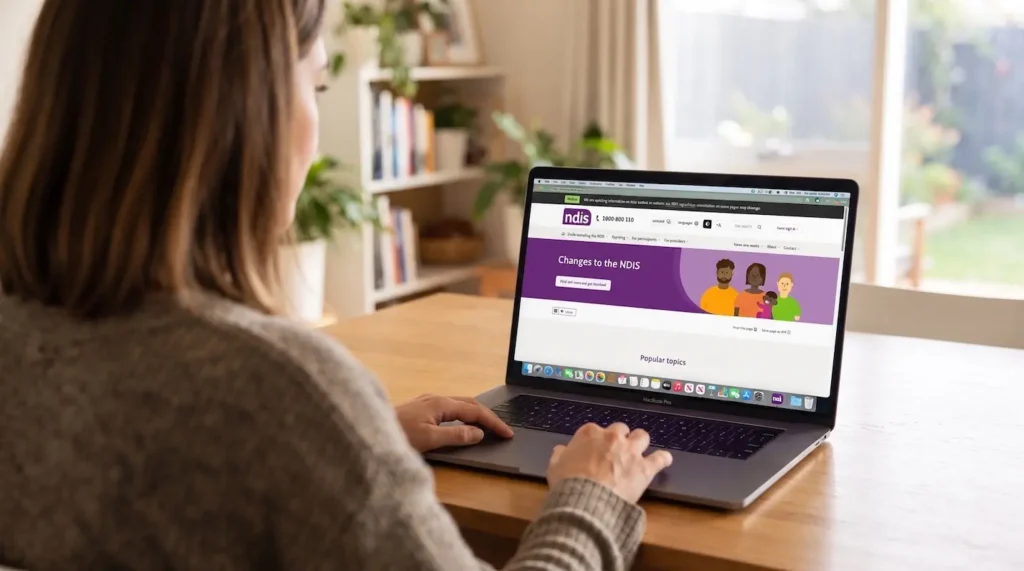
Also no. The NDIS operates on a “no double-dipping” principle. It won’t fund any service, or the gap fee for any service, that’s already claimable through Medicare. In practice, this means:
- If a session is eligible for a Medicare rebate and you claim it, the NDIS won't cover the remaining gap.
- NDIS funding can be used for speech therapy that is directly related to your or your child's disability, reasonable and necessary under your plan, and not otherwise claimable through Medicare. For example, once your annual Medicare allied health sessions are exhausted, or for support outside the scope of what Medicare rebates.
- To claim through NDIS instead of Medicare for a particular block of therapy, your invoice generally shouldn't reference a Medicare item number for those sessions. You or your plan manager choose one funding source per session, not both.
For most families with an NDIS plan, NDIS funding ends up covering the bulk of ongoing speech therapy, with Medicare used earlier in the process, such as for assessment or before an NDIS plan is in place, rather than run alongside it.
Getting Started
If you’re unsure whether Medicare can help cover speech therapy, need help understanding your referral options, or are ready to book an initial assessment, our team can talk you through the next steps. Contact us to get started.
William Huynh is a senior speech pathologist and the director of NDIS-registered provider Brighter Futures Allied Health. He has over a decade of experience working with children and adults with complex communication needs, including disability, dysphagia, and acquired language impairments. William has completed specialist training in approaches such as Key Word Sign, LAMP Words for Life, Grid 3, and Hanen’s More Than Words. He also supervises speech pathologists and student placements, supporting evidence-based and family-centred practice.